Friday, September 27, 2013

There's a Time for Us to Wander

My non-genre pieces of short fiction are notoriously hard to find a home for, which is why they often end up in my Six Demon Bag.  Stylistically, this piece was influenced by the novel After Dark by Japanese author Haruki Murakami... the story itself, however, is one of the most personal pieces I've ever worked on.


There's a Time for Us to Wander
by
William Todd Rose


The old man is ninety-eight years old and lying in bed at the Meadowside Nursing Home. His thin hair is silver-gray and tussled from the pillows propping up his head and shoulders. An oxygen concentrator sits on the floor like a faithful mutt tethered to its master by a leash of clear tubing and it hums gently as air bubbles through water in its plastic humidifier. The cannulas loop behind his earlobes, but the twin spouts that are supposed to deliver a steady flow of air into either nostril are askew and blow against the stubble covering his cheek and chin. According to the calendar tacked to the corkboard in the room, it’s Tuesday and someone should have been by the day before to shave him; but this obviously didn’t happen. Perhaps later in the afternoon, after a lunch of buttered bread with turkey and gravy….

He shifts slightly and the sheet and loose-weave blanket covering him somehow make him look smaller, as if he’s shriveled away beneath them. They are as nondescript as the beige walls and as boring as the drivel playing on the television mounted near the ceiling. The set looks down upon the room like a mumbling sentinel whose dialogue is lost beneath the sounds of the home: visitors speak so loudly it’s impossible to tell whether the voices come from the room next door or the far end of the hall; nursing shoes squeak against the polished floors and an ancient voice releases a wordless cry, as if testing the corridors of infinity to see if there is any sort of reply from the other side.

The window in the old man’s room looks out upon a courtyard formed in the center of the U-shaped, brick building. Benches cluster among the grass and flower beds, but he will never be able to sit upon them and feel the warmth of the sun on skin that seems as thin and wrinkled as tissue paper. We know that he never recovered from his fractured hip and that his legs are securely enveloped within what looks like giant blood pressure cuffs. They fill with air, deflate, and fill again, keeping the circulation moving like cops directing traffic at a sluggish intersection. The view, like the television, is lost on him, however. Without his glasses, the majority of his world consists of multicolored blobs that shift and bleed into one another until faces pull themselves into existence from the Technicolor sea. These faces lean in close with voices raised to ensure he can hear what is being said. It’s nurses mostly, with the doctor only breezing through later in the evenings. Visitors, when they come, usually arrive in the mid afternoon and are gone by dinner. None of them, however, can see us. They skirt around our presence as if they sense on some level that they aren’t alone with the old man; but we are invisible to them, formless and primordial.

Moving backward through time, we see a white, two-story house nestled in a hollow where two mountains converge. A long porch spans the length of the house, its concrete steps bordered on either side by flowering bushes that have grown so unruly their trunks are tied to the banisters with lengths of rope. We move up the steps and pass a swing that’s suspended by rusty chains from eye hooks in the ceiling. The paint here is faded, peeling in places, and the floorboards slightly bowed. Feeling neither heat nor cold, we glance at the large print thermometer angled toward the kitchen window as a mere curiosity. Sixty-eight degrees with the afternoon sun dappling through a canopy of leaves as lush and green as any rain forest; water gurgles through the creek dividing yard from forest as squirrels chitter and birds tweet. It’s peaceful here, serene in a way that those who are born and die in a city will never know. But this is no pleasure trip, no vacation through space and time… we have work to do.

We drift toward a storm door whose black handle was broken long ago. The jagged piece of metal below the lever poses no danger, however, as we pass through this outer door as easily as the wooden one on the other side. Within the house now, in a room with a daybed and a chimney whose hearth has been filled with a gas stove. Pictures hang on the paneled walls, their glass frames smudged with dust, and from another room we hear a television. The volume is turned up so loudly that the tinny speakers rattle with the chatter of an announcer as a pinch hitter connects bat and ball with a sharp crack. We move toward this sound, floating through the front room and into a kitchen whose faded curtains have hung before the windows so long that their pattern has transferred, ghost-like, onto the panes. Another doorway connects to the room where the old man sits in a recliner.

He is heavier here, his gut overlapping the belt that keeps his baggy work pants from slipping down his stubby legs when he stands. His hair isn’t as thin as when we first saw him, but he’s still old enough to require the assistance of two canes. For the time being, however, he is content to lean back in the chair and fish Circus Peanuts from a bag hidden within the pouch on its side.

To the casual observer, it would appear as if he is watching the game with intense interest. We, however, are never casual. We notice how his line of sight is slightly lower than the bottom of the screen, how his eyes shimmer behind the spectacles perched on the bridge of his nose, and the way the remote trembles in his hand. The old man isn’t watching the television, but rather what’s beneath it. On the shelf directly below are three photo frames. The centerpiece of this trio is a portrait of a lady with curly white hair and glasses so large that their lenses touch the wrinkles on her cheekbones. Her mouth is drawn into a serious expression, deepening the lines which crease the corners of her thin lips, but there’s kindness in her eyes. And it is those eyes that the old man gazes into while a stadium brimming with fans cheers.

We sip the emotion in the room and sample the flavor, breaking down the gestalt into identifiable profiles. The sadness in his heart is palpable, like salty vinegar left to age, uncorked, in a musty closet. The memory of funeral flowers taste like bitter leaves and traces of loneliness lend an undertone that is unmistakable once identified: a dash of sawdust swirling lazily in the air while a project that will never be finished gathers dust.

This is not the Time we were looking for.

Further back into the past now and the exterior paint of the house brightens until it is as stark white as a field of snow. The windows are clear and new, without curtains, and all the little nicks and scars are missing from their sills. The bushes on either side of the concrete stairs are gone as well. There’s no swing on the porch, no thermometer nailed to the supports, and the rooms within are empty, waiting to be filled with a newlywed’s dreams.

A man and woman stand in the yard, looking at this piece of land in rural West Virginia with eyes that drink in every detail. They aren’t familiar with this property, are yet to learn its quirks and secrets, but the woman’s eyes sparkle in the Autumn sunlight as a slight breeze rustles her curly, dark hair.

“I love it… I want this one, Roy. I really want this one.”

The man glances at his bride as he squeezes her hand. “Then this is the one you’re gonna get.”

Here, the emotion tastes as sweet as honeysuckle at the height of the season. It blossoms like the most rare and delicate nectar, sometimes so heady that Time itself swoons… but mostly it melts and diffuses so slowly the flavor could last a lifetime without ever growing stale.

This is our starting point. The living room with the blaring baseball game, our end. We set to work, touching the timeline of the old man’s life like a stone skipping across a lake. Yet the sparkling waters are never quite as vast as they seem and our work is completed all too soon.

Now we return to room 7B in the Meadowside Nursing Home. In our absence other visitors have arrived and they form a loose horseshoe of bodies around the bed, parting only to make room for the nurse. She bends down so that her crisp, white collar tickles his chin.

“Roy… you’ve got company. Todd’s here to see you, Roy. You remember Todd, don’t you?” The nurse’s voice sounds as if she trying to communicate with a deaf child, each word enunciated with slow patience. The old man, however, doesn’t so much as look in her direction, for he has noticed us standing by his side, so vibrant and clear against the blurred cataracts of color.

For a moment, we see through the old man’s eyes. Due to his beliefs and upbringing, we appear as a radiant figure bathed in a light so soft and ethereal that it seems to disperse from somewhere within our body. We’re draped in a white robe whose folds cloak the secret of our sex and golden hair cascades to the back of our graceful neck. Our skin is smooth, untouched by age or scars, and in the darkness of our pupils, nebula float amidst a vast field of stars. As we watch ourselves from a mortal perspective, wings unfurl from our back and the feathers rustle slightly as the corners of our mouth turn up into a smile.

“You come t’ take me Home?” With his dentures soaking in a tray on the bedside table, his voice is thick and sounds as if he’s speaking through a mouthful of chewed food.

“We can’t do that, Grandpa.” The one called Todd answers as he touches the old man’s hand. “They have to take care of you here.”

The old man raises his hand from the bed and makes a motion in Todd’s direction that looks as if he’s shooing a fly. Dismissing his grandson, he looks directly at us and repeats the question again: “You come t’ take me Home?”

When we speak, our words are reserved solely for him. A chorus of voices fill his head, each speaking in unison, each recognizable as someone from his past. People he’d loved and lost, friends and family whose funerals he’d attended while his own life stretched on. “We are not the one of which you speak, Roy.”

“You ain’t th’ angel of death, then?”

His guests look at each other with silent frowns while nervous laughter bubbles from the nurse.

 “Now, Roy… you know that’s not the angel of death. It’s Todd, Roy. Todd.”

She is of no concern to us.

“What you call the angel of death is known to us as Coda. But your time to accept his embrace has not yet come.”

The old man’s brow furrows as confusion clouds his eyes. He looks at us for a moment in silence, blinking while his other visitors raise their voices even louder, as if they believe he simply can’t hear them.

“Then who are you?” he finally asks.

“I’m Todd, Grandpa. Todd.”

“You may call us Bliss, old friend. We are comfort.”

We slip from words into pictures, showing him that which we wish to convey. Here is a man who loved the outdoors, who walked more miles through the forests and hills in his lifetime than some people ever dream, now confined to a bed. Deprived of the trees and babbling creeks teeming with rainbow trout, unable to catch even a fleeting glimpse of the thickets and undergrowth he still wanders in his dreams. Here is a proud husband and father, a retired pipe cutter, waiting in shame for someone to come along and clean the mess which fills the room with a stink that causes him to wrinkle his nose. He was a provider, a person who tried to live with dignity and honor, now being taken care of in much the same way as an infant. What we showed him was not our invention, but merely a reflection of what we saw within his own mind.

“We can make the wait better.” We say, dropping back into words. “We can ease your time until Coda comes calling. The gift is yours, if you accept it.”

The old man closes his eyes and his bottom lip quivers so slightly it goes unnoticed. But with a nod of his head, he signals his wishes. We lean forward and our lips touch his forehead, transferring the gift from our essence into his.

The room with the television and oxygen concentrator fades.

He is walking down a hillside with a .22 slung over his shoulder. His back is straight, his legs are strong, and he swings a red squirrel by the tail as a clubfooted beagle bounds along beside him. From his vantage point on the hill, he can see the grandchildren playing in the yard and their squeals of laughter startle a flock of birds into flight. A woman with curly hair just beginning to show the first streaks of gray hangs laundry on the line and his son swings on the porch with a sweating can of cola in his hand.

“Reckon we’ll be eating squirrel gravy tonight.” He calls out as the beagle yips in agreement.

From the forest, he hears a voice that sounds as if it’s coming from the end of an infinitely long tunnel: “Now, Roy, you know it’s meat loaf night. Every Tuesday is meat loaf night. You know it’s Tuesday, don’t you, Roy?”

He peers into the shadows of the forest, searching for whomever had spoken. But there is only a rabbit, twitching its whiskers as it warily eyes the dog from afar.

“You should make some biscuits too, Mommy. You know how them kids love your biscuits.”

He continues walking down the hill, the voice from the forest growing fainter with each step as it explains in a low, rational tone: “Dementia in a patient his age isn’t uncommon. I’m really surprised we haven’t seen signs of it before now. The poor thing. It breaks my heart …”

And then the voice disappears entirely as his wife smiles.


Sunday, June 30, 2013

My Love Affair with the Sky: A Brief History

I’ve always been something of a backyard astronomer. I remember being very young and harboring the belief that the sky was this massive black dome and the stars were pinpricks which let light in from whatever lay on the other side.  It was also about this time that I really started watching the moon from the backseat every time we were driving after dark.  I didn’t understand how it always seemed to be moving at the exact same speed we were, holding its position in the sky regardless of how fast or slow my parents drove.

A little later on, I got one of those telescope kits for either Christmas or my birthday.  It came with a microscope and the eyepieces were interchangeable, which sounds pretty nice.  But this was a kid’s telescope. The focuser, like the rest of the telescope, was plastic and minute adjustments were nearly impossible.  The included tripod was so small that I had to lay flat against the ground to look through the refractor and offered very little in the way of balance.  The slightest tap would send the thing wildly off course, but I didn’t mind.  While the resolution wasn’t strong enough to view the planets pictured on the box, it did allow me to see faint little blobs of light where the naked eye only saw darkness… but very little else. Even the moon didn’t appear as close as the box had led me to believe. It was actually easier and more comfortable to simply stretch out in the grass, put my hands behind my head, and look up.  While I ended up using the microscope way more often than the telescope, that little toy clued me in that there was a lot more going on up there than I’d first thought.

My grandfather had always been a hunter, which meant he had a pretty good pair of binoculars, and when I’d spend the night at their house, I’d wander into the backyard with the glasses slung around my neck … but still no rings of Saturn or the moons orbiting Jupiter.

Flash-forward to my early twenties:  I was living in the House of Hot Beverage with my roommates Larry and Erin; out of the blue, my mom gifted me with a nice, 90mm refractor for apparently no reason at all.  It had a nice assortment of eyepieces and I remember standing in the yard, looking at the Hale-Bopp comet as its interstellar trajectory passed our own.  Hale-Bopp was awe inspiring.  The main body of the comet was like the largest and brightest star I’d ever seen and twin tails shot out the back.  Looking at the tails, I could certainly see why early cultures associated comets with serpents and dragons.  The tail looked exactly like a bifurcated tongue of flame, each segment flickering and licking independently of the other.

A year or two later was my first year of marriage. My wife and I were renting a trailer way back at the top of a ride, far removed from the light pollution of Charleston. In the evenings we’d lay out on the deck, gazing upward at a sky brimming with stars and try to pick out the fast moving satellites orbiting the earth. Some simply looked like travelling stars, but others seemed to wink as they crossed they sky. I would later learn that these satellites were out of control and the flashing was created by the sun reflecting off solar panels spinning wildly through space.  But again, this was all naked eye stuff. The telescope my mom had given me had come and gone, being a casualty when I moved out of the House of Hot Beverage.

We’d been in Parkersburg around four or five years when my next scope entered my life.  Farrell and Devin had given it to me for Christmas, allowing me to pick out the one I wanted beforehand.  It was a Meade reflector with a four inch mirror, a red dot finder scope and computerized go-to mount. With the attached controller, I could enter ascension and declination coordinates and the drive motor would automatically move to the object, slewing just enough to keep it centered, no matter how long I chose to view it.  Another nice feature were the tours pre-programmed into the computer which would correlate  the date, time, and my longitude and latitude  and then guide the scope to the “highlights” of the sky overhead. How long I spent on each one was entirely up to me as the tour wouldn’t continue until I pressed the proper button on the controller.

My favorite thing to do was to lug the scope over to the graveyard that was across the road from our house and start the evening off with one of these tours.  After that, I’d spend an hour or so exploring the heavens with manual adjustments to the scope  and this is how I got my first look at another galaxy. I just stumbled across it one night, this fuzzy little patch of light in the sky; it was roughly ovular in shape and looked a bit like a distant cloud. However I could see an arc of darkness near the center, which gave the impression of an eyelid, and just below this arc was a bright, spherical pupil. This was one of those moments in life which completely touched my soul. It was as if I’d looked into space and discovered something looking back.
Since I knew the portion of the sky I’d saw it in and instantly recognized it as either a galaxy or nebula, I immediately  pulled out my planisphere upon returning home. A few adjustments to the concentric rings and I saw that the only deep space object in that section of the sky at the time I was viewing it was M64 in the Messier catalog.  Once I had the catalog number, I was able to look it up in my field guide and identify it as the appropriately named Black Eye Galaxy.

Shortly after this, I bought an 80mm refractor for times when I just didn’t feel like hauling the Meade outside and messing with the counterweights.  It was through this trusty little scope that my breathe was taken away when I decided to view M45, better known as the constellation Pleiades. When viewing most stars, there’s a lot of seemingly empty space surrounding them, even when viewed through a high powered telescope. The Pleiades spring up in the eyepiece though as a densely packed region of stars. There’s so many, in fact, that it looks like glitter blown into the night sky from the cupped hand of God.  This is, by far, my most-viewed object in the sky. I have this connection to the constellation that’s kind of hard to explain. When I’m viewing her, nothing else exists.  I am completely and utterly at peace with both myself and my place in the cosmos, so much so that it’s become a spiritual experience.  Anytime I spot Pleiades overhead it’s almost as if it reaches out to touch my soul. I feel that same sense of well-being and can’t help but smile as I whisper, “Hello, old friend…” (true story, I actually do that).

I’ve also got a Celestron Powerseeker 127EQ reflector in my stable now.  Its six inch mirror provides more aperture than my Go-To Meade did, but it lacks the bells and whistles. In all honesty, I haven’t used this one much because collimating the mirrors is kind of tricky, even with the help of a laser collimator; without them in proper alignment you really can’t get quality detail, so I think I need to find someone with a little more experience who’d be willing to walk me through the process. I’ve tried looking it up on Youtube, but it’s just not quite the same since you can’t ask a video questions.

Earlier today, my wife and I drove to the planetarium of a local college for a viewing of the Cowboy Astronomer, followed by a star talk describing what can be seen in tonight’s sky.  It was the first time I’d been in a planetarium since I was a kid and the experience was everything I’d hoped it would be and more; it even inspired my wife (who’s always been more into history and physical science than astronomy) to come with me on one of my outings in the near future.  It’s time to get that Celestron in working order, so we both don’t have to take turns with the same scope but can independently explore the cosmos and share what we find.  Which sounds like an awesome date to me.


Saturday, June 29, 2013

Fighter's Bite (a free short story)

(originally published in Zombie Tales, Undead Press. 2012. If you would prefer to download this story for your e-reader of choice, please click here)


FIGHTER’S BITE
by 
William Todd Rose


The dented metal door muffled the roar of the crowd, but Bruno Swaggart  could tell the house was packed.  Drunk on moonshine, the audience banged aluminum chairs against the floor and the dull clangs echoed through the gymnasium like misfiring pistons.  The erratic rhythm punctuated a cacophony of cat calls, shrill whistles, and a hundred voices vying for dominance in a sea of chaos.  Despite having weapons checked at the door, a few unruly spectators somehow managed to smuggle sidearms into the old school and the occasional gunshot rang out above the din... but there were always a few in every crowd.  Most didn’t harbor any nefarious schemes – they were just good-old-boys who’d grown up embracing the concept that a party wasn’t a party unless there was some sort of gunplay involved.

At one point in his life, Bruno had thrived on the incomprehensible murmur of an expectant audience.  It had stirred something within him, working him into a frenzy in the same way that drums excited a tribal dancer.  Confidence had surged through his veins and he’d literally felt anything was possible:  he could punch through a brick wall with his bare hands and dance so quickly that his opponent would register nothing more than a blur;  he was Superman who’d overcome his aversion to Kryptonite, an unstoppable juggernaut, two hundred and ten pounds of unleashed fury.  But The Plague had changed all of that.  For the longest time, his greatest fight had been simply staying alive and there were even times when he’d considered taking a dive.  A well paced bullet to end the suffering, a knife pulled across the wrists, a sleep free from the dreams which haunted him nightly: these had all seemed like viable options in a world that no longer made sense.

Yet somehow Bruno had found the strength to carry on.  Now, with society struggling to emerge from the ashes of the old world like a crippled phoenix, he sat within the locker room of a burned out high school and harbored no illusions.  The boisterous crowd on the other side of the door hadn’t paid dented cans of food and jugs of water to witness Bruno Swaggart participate in a sport he’d once loved:  they had come to see him die.

With his gloves laced tightly around taped fists, he leaned forward on the narrow bench and stared at cinder block walls which had once been red.  The paint had peeled and chipped, revealing large swaths of gray block beneath;  flecks of crimson stuck in the pits and gouges marring the surface of the masonry and the contrast tricked Bruno’s mind into creating order from chaos.  His imagination formed pictures from these splotches of gray and red, but never anything as picturesque as the sun setting on a pristine beach or an unspoiled forest with trees striving to touch the stars.  No, the patterns he saw within the flaking paint always became faces.  They stared back at him with eyes as cold and unfeeling as the rusted pipes overhead, skin cracking and festering with hints of bone peeking through flesh twisted and disfigured by decay;  they sneered through ravaged lips, revealing shattered teeth speckled with blood. Teeth which wanted nothing more than to bite and gnaw at the flesh of the living…

From outside the locker room, Bruno heard the announcer’s voice call out above the din of the crowd.  The words were muddled and indistinct from this distance, but he knew the spiel well enough to understand the gist of it.  Yelling through a megaphone like some 1950s era cheerleader, the man would be stringing adjectives and adverbs into a rhythmic pitch designed to whip the already boisterous spectators into a fervor.  They’d tasted blood by now, had reduced into primal beings that only wanted to take some sick glee in watching people die.  Some of them pretended to pick favorites and held up cardboard signs with fighters' names scrawled in crayon.  Others dropped pretense, openly shouting “Kill ‘em!  Kill ‘em!” without ever drawing a judgmental gaze from those around them.  Deep down inside, they were all just as callous and bloodthirsty as those they’d come to watch.

Almost time now.

Bruno hopped off the bench with a bounce.  Taking several jabs at the air, he dropped into a slight crouch before hopping on the tips of his laced-up boots.  Once he would have had a small crew with him: a coach, a trainer, a medic… but the world had changed.  He had changed, the sport had changed, everything had changed;  but, in all honesty, he simply didn’t give a damn anymore.  Life was no longer about living but staying alive.  The bloodshed, the stench of rotting meat filling empty shops and streets;  the images burned forever into his mind and the nightmares they birthed, the echo of screams in corridors of memory:  those things had hardened him.  Whether he lived or died was of no consequence.  Everyone had to go sooner or later;  yet Bruno had no problem doing whatever it took to make sure his numbered days were as comfortable as possible.

Bowing his head, Bruno crossed himself, and whispered his version of a prayer:  “Carpe diem.”  He then slammed into the metal door so hard it struck the wall with a clang and slapped his head with his gloves as he moved through a hallway lined with lockers.  Just outside of the gymnasium’s double doors, the tile was scorched as if someone had once built a campfire there and the walls were covered with graffiti, some straining for irony (School’s Out) while others were as terse and stoic as a news report: Salem is dead. Stay out.

The roar of the crowd hit him like a body blow as the gym’s doors were thrown open for him.  It was as if the sound had pounced on the other side, waiting for the two old men to do their job.  A woman in a bikini strutted in front of the metal cage that dominated the basketball court.  The left side of her face was scarred, a zigzagging chasm carved into flesh, and the tops of her thighs had the shiny look of skin that had burned but never quite healed.  Holding a sign above her head, she seemed impervious to the catcalls and whistles that followed her like a lovesick teen.  She was a professional, this one.  Probably one of the last left, in fact.

Bruno had made his entrance a little early, so he flexed his muscles, jogged in place, and halfheartedly punched at the air.  The entire time his eyes scanned the room, taking everything in at a glance.  It was a learned response not limited to this specific place and event: everywhere he went, the same precaution was taken.  Every step.  Every moment of what passed for his miserable little life.  Constant vigilance and hyperawareness were the name of the game.  And he planned to win for as long as he could.

The sumo wrestler, Bruno noticed, hadn’t lasted long.  A couple of lanky guys were busy scrubbing his blood from the floor while a third speared chunks of flesh with a tool that had once picked litter from a park.  What was left of the big guy was carried out on a covered stretcher, two extra men on each side to accommodate the weight.  One massive arm had slipped from beneath the red-splotched sheet and its finger pointed at the ground, as though it were purposefully marking its path with the perforated trail of blood dripping from the meaty hand.

Where the hell did they find a sumo wrestler, anyway?

Bruno glanced to his right where a man with a ring of shoulder-length brown hair surrounding a bald dome was jostled by a crowd of people.  Scribbling furiously in his spiral ring notebook, the man scratched out code that was as indecipherable to most as hieroglyphs; but the glint of intelligence in his dark eyes was enough to let people know he wasn’t fucking around.  He knew each name, each bet, and could be counted on not to squelch.  This earned him the closest thing to trust this world had to offer and his goons snatched outstretched cans of food from the hands of those around him.  In return, they received a scrap of paper and a smile from the boss himself.

“Say, Smitty,” Bruno called among the controlled chaos of the crowd, “where’d they find a sumo?”

Smitty’s eyes flitted from the notebook just long enough to make contact.  And then he was writing again, his pencil worn to a nub and scratching across the paper.  “Dunno, champ.  The fat fuck didn’t stand a chance, though.  Put on a good show with the stompin’ and throwing sand and all.  But when the bell rang, he was bleedin’ before it even had a chance to fade.”

Bruno sniffed once and rolled his head in circles, limbering his neck.  “Better show from me.” he promised.  “Main event, baby.”

“We’ll see about that.  Ten to one against.  Death’s the ultimate bad ass, friend.  And a lot of folks think your number’s just about up.”

“Shit… un-fucking-defeated, boy.” The banter was a bad rendition of the roles they both played, lacking the warm tones of honest conversation.  Still, Bruno felt a little silly.  It was obvious to anyone with a working pair of eyes that he’d never lost a fight.  He was, after all, still alive.  “And planning to keep it that way, too.  Bite free since ’23, mother fucker.”

The scarred beauty leaned her placard against a table and took up a silver hammer, which she  struck back and forth between two of the cage’s bars.  The jangling sound was optimistically called “the bell” and, just like that, it was go time.

Entering the cage through a door which was locked behind him, Bruno held his hands in the air, forming the shape of a V.  There was no referee to have a quick word with, no meeting in the center of the ring before going to respective corners.  The age of niceties had been left behind, its staunch tenacity toward decorum abandoned as if it were just another body littering the streets.

When a surge of excitement rippled through the audience and their cheers reached deafening levels, he knew his opponent was being escorted to the cage.  Two biker types steered him toward the ring, each one clutching a long rod that ended with a loop of rope.  One of these loops pinned his arms to his side and the other encircled his waist, acting as a rudder.  In a real fight, he would have been a featherweight and pitting him against a man of Bruno’s stature almost unheard of.  But it wasn’t exactly size that mattered in this match.  With a black sack over his head, he thrashed and fought against his restraints so violently that the burly handlers moved in jilted staggers, constantly yelling back and forth as they made corrections to the trajectory.

The door on the other side of the ring had a square hole welded out of its center and this allowed the rods to bridge the gap between killing floor and safety as the padlock snapped shut.  The thugs yanked him backward so hard that the entire cage shook and another man’s arm snaked through the bars, clutching the black sack as he waited for the agreed signal.  In unison, they nodded and the ropes were released as if magically severed as the bag was snatched from his head.

Thinning red hair stuck out in tufts, almost as if he’d just stumbled out of bed, and his yellowed teeth gnashed at the air.  He almost looked normal, but it was the little things that gave his condition away.  The lack of contraction in his dilated pupils.  The creepy stillness of expression that, even to this day, shivered Bruno’s spine with chill bumps.  The flesh had that particular look the world had come to know so well, both pasty and waxen at the same time with shadows adding depth to sunken cheeks.  A silver band dangled from one nipple and blood from the gunshot wound still matted the curly hair on his chest.  The bastard couldn’t have been more than twenty minutes dead, which meant he would still be fast and cagey... but how the organizers found such fresh corpses was one of the many things Bruno didn’t question.

Even if he’d had the inclination to form such questions, he didn’t have the time.  Before the rods had even completely withdrew, the thing sprinted across the ring.  Its outstretched arms reached toward Bruno with fingers curled into talon-like hooks and the explosive cheer from the crowd was pushed to the periphery.  With his concentration focused and the audience no more than muted background noise, Bruno darted in with his gloves held before his face.

The first jab smacked into the thing’s jaw with a flat smack and the force spun the creature around as if the floor had just slipped beneath its feet.  Not quite falling, it sprang forward before centrifugal force had even finished its business.  But Bruno was ready for that as well.  A roundhouse on the side of the thing’s face knocked it off course and its body tumbled across the floor.

This was it.  The moment.  Only when facing death did Bruno feel most alive.  His heart thumped adrenaline through a body that felt as tough and efficient as an old world machine: keenly aware of every muscle, every twitch or spasm, with his feet shuffling their intricate dance and beads of sweet just beginning to cool his brow. 

There were no rounds in this fight, no brief respites from combat where he could catch his breath and spit blood into a bucket.  The dead were relentless in their single minded pursuit, oblivious to pain or fatigue;  they kept coming at their prey time and time again, wearing them down with persistence until superior muscle tone no longer held sway.  Only one could remain:  kill or be killed, after all, was the law of this post-apocalyptic jungle. Besides, the audience had paid for a show and his share of the prize would make him rich.

In this graveyard of a world, aluminum was the new gold.  A single can of pork and beans would net him a good time with any of the Food Whores down by the tracks.  Ten tins of sardines would pay his monthly protection to Boss Nash.  And there would still be plenty left over.  In a land where the dead scoured the ruins for the slightest signs of the living, this was what passed for a playboy lifestyle.  And it suited Bruno just fine.

The zombie was on its feet again, scrambling toward him before it had even completely stood.  Lacking that spark of life, eyes that were as dusty and emotionless as marbles stared unblinkingly at the intended target.  Anxious to keep the initiative in his favor, Bruno moved in like a striking snake. So close to the damn thing that he caught whiffs of its recently voided bowels, he realized his mistake.  The zombie had been moving a little more quickly than he realized and he’d overcompensated, ending up close enough that the thing’s fingernails raked across Bruno’s vinyl gloves.

An uppercut to the face only succeeded in piercing the thing’s top lip with a broken tooth   A flurry of jabs cracked ribs like twigs, yet the zombie remained unfazed.  With its fingers now entangled in the laces, it yanked the glove toward its face.  Teeth ripped through the outer shell and tore strands of white stuffing from the hole, which the zombie then released with a shake of the head.

All of Bruno’s skills and training deserted him.  The grace was gone from his savage dance and he’d regressed to nothing more than a street fighter.  His blows were uncoordinated and sloppy, thrown from his weak arm with no real planning or strategy, and bounced ineffectually off the zombie’s head as it ripped more stuffing from the glove.

The roar of the crowd was thrown back into sharp focus:  yells and stomping, glass bottles of moonshine shattering against the walls, some indecipherable chant rising and falling like a wave in the turbulent ocean of noise.  Bruno’s throat felt raw and tight as his own scream added to the din and he’d begun kicking with quick thrusts of his legs in hopes of clipping the creature at the knees.  The thing had eaten so far into the glove that Bruno felt its chin scissoring over the thin layer of batting, pulling away the only barrier between those teeth and the soft flesh within.

The thing’s hands were totally ensnared in the boxing glove’s laces, making it next to impossible to pull away.  They flopped like fish that had been thrown into a cat’s cradle, pulling and stretching until the glove no longer fit as snugly as it once had.

The hundreds of feet stamping against the bleachers had picked up a rhythm now:  two quick stomps followed by a single hand clap.  For one insane second, Bruno actually expected the crowd to launch into the chorus of We Will Rock You;  but then other thoughts pinged through his mind like ricocheting bullets, obliterating one another before they had a chance to fully form.  Instead of reason there were only flash bursts of emotion:  fear, intense sadness, a nameless longing for something he would never know … but mostly remorse.  Like a dirty fighter, regret hits you when you’re not looking.  It lurks in the darkness, awaiting its time to pounce before fading back into the shadows.  Sensing weakness, the regret didn’t strike and run this time.  It stood its ground and shredded the remaining strands of self respect as thoroughly as the zombie did his glove.

Bruno’s hand wiggled like a loose tooth in a socket as he struggled to free himself.  He felt the silken lining sliding over his hand and cool air rush in through the gnawed hole.  The zombie plunged its face again;  with the protection of the glove no longer an issue, it could see the pink flesh of fingers and the sight seemed to throw the thing into a frenzy.  It’s hand writhed in the tangle of laces, pushing and pulling, demanding to be freed.  Nothing mattered but the feast and the audience ate up every second of it as their voices rose into a thunderous din.

Just as the undead bastard sank its face into the hole, Bruno’s hand plopped free, leaving the abomination to snap at empty air.  Still operating on pure survival instinct, he immediately launched into a flurry of punches.  His taped knuckles slammed into the creature’s face so hard that a fracture-like pain flared in his middle finger.  Again and again, jackrabbit fast, ignoring the shock of sudden impact:  Bruno was a single-fisted juggernaut whose wild eyes told a story as old as the dinosaurs.  Here was life and death splayed out for all to see.  Here was the endless struggle for dominance in an uncaring world.  It was the type of moment where you could be wholly and completely reborn… or die.

Bruno skirted backward, extending his reach as the zombie lunged, and struck with his gloved hand.  His frenzy had been tamed now and each hit was more solid than the last.  The zombie’s nose broke with a sharp crack and the jagged bone forced its way through the skin in a bloodless explosion of meat.  Teeth plinked like porcelain against the polished, wood floor and Bruno continued his barrage.

The zombie lunged again but the sweat-drenched prizefighter was ready.  He spun away just before the collision, his unfettered hand clutching the thing’s hair as his body swung around and crashed into the back of the creature.  With momentum working to his advantage, Bruno drove the monster forward and the thing’s head crashed into the unforgiving bars of the cage.  Bashed repeatedly against the steel, the creature’s forehead took on a dented look, as if bone were caving in just below the surface.  And yet Bruno continued his assault long after the thing’s limbs had gone limp.  He knew it was true dead, as they called it in the business, but found himself powerless to stop  It was as his body were a killing machine that, once revved up, had to be given time to power down.

By the time he allowed the thing’s body to crumple to the floor, the doors to the cage had been unlocked.  The crowd was going wild with applause and the scarred bikini model carried a large bowl of canned goods as if it were an offering to the gods.  The bowl was mostly symbolic.  The food within it would definitely be included in his prize, but the true wealth of the purse was so great that the woman would have been crushed beneath it. 

He hadn’t needed Smitty to tell him the odds.  He knew fully well going into it that no one really expected him to live.  So a few private bets placed on the side had netted him a fortune of food.  He would eat for weeks without  considering rationing and would have his pick of the higher class food whores instead of settling for diseased guttersnipes.  His life was about to get very, very good.

Bruno held his hands aloft and bounced across the floor as he played to the crowd.  There were more than a handful of boos scattered among the applause, but you always had that.  The only thing that mattered was Bruno would be eating well and they would not.

Pausing to wink at the ring girl, Bruno noticed his hand and felt as though he’d taken a sucker punch to the groin.  Bile stung the back of his throat and his breath caught on the bitter flood of acid, becoming nothing more than a sharp gasp with no follow up.  His heart was a runway locomotive and the blood surging through his veins felt cold.  He stared at the back of his bare hand as the broad smile melted from his face drained of color.

A flashback memory of landing that first punch after freeing himself from the glove:  there’d been a flash of pain, what he’d suspected to be a hairline fracture.  But, no.  There it was, this jagged little break in the skin, nothing more than a scrape really.  In another world, in another time, it would have meant nothing;  but in the wastelands there was no word for inconsequential.  Even something as small as this flap of bloodstained skin carried grave consequences.  In the trade, it was known as fighter’s bite and not to be taken lightly.  Regardless of whether you’d been chewed on like a soup bone or just nicked your knuckle while landing a punch, the results were the same.

Bruno would never live to enjoy his food.  He’d never fuck again.  In his profession, death was a career path.  And he thought he’d been ready for it.  He really did.  He’d always sworn that he’d never be one of those assholes:  the ones who tried to hide a wound, who went about their business in an exaggerated manner, almost as if they were calling attention to the fact that everything was normal.  But when faced with infection, priorities changed without debate.

Lifting his tattered glove as if it were the severed head of an enemy, Bruno turned in a slow circle and played the part of victorious champion.  Wriggling his hand into its confines, he forced a smile.  His fighter’s bite was now hidden, but how long did he have left? 15 minutes?  Half an hour?  Even less if anyone noticed that his sweat continued streaming long after he should have cooled down. Either way, he’d be dead before the fires in the burning barrels gutted out.

But those were his moments, damn it, and he planned on savoring every one he could. And who knew?  Once that last breath had rattled his soul free and his muscles twitched with the semblance of life, maybe Boss Nash would allow him to continue his career.


****

Personal Rules of Writing

As stated in the title, what follows is a personal list of writing rules.  Some of these (such as #7), I'm still actively working on; others have become more ingrained in my creative process. But I would never be so ostentatious as to claim that all writers should follow these guidelines.  We each have our own distinctive voices and styles; rules that work for one author may very well be disastrous for another. So this list really serves as a reminder to myself more than anything else.  And, as always, these are not set in stone. They are simply my current guiding principles and are subject to revision and change.


1)      Write whatever the hell you want to write about. Don’t let genres limit your imagination.

2)      Thesaurus use is okay when a word is on the tip of your tongue… but don’t use words that you wouldn’t use in everyday conversation.

3)      Never stop working on your current work in progress for the day without at least a general idea of what happens next.

4)      It is not necessary to describe every detail of a room or person; instead, pick the most prominent features. Picture yourself seeing it for the first time and describe the details which stand out above the others.

5)      If you find yourself completely and entirely stuck, try switching gears. More often than not, you’re simply working on the wrong project.

6)      Don’t use an adverb if there’s a stronger verb which means the same thing. For example, a character could run quickly down a hall… or the character could dash. Or bolt. Or sprint.

7)      Pay attention to simile usage.  Trim them down and use with care. An abundance of similes can quickly pull the reader out of the story.

8)      If a simile is appropriate, never use a comparison that is outside the character’s frame of reference.

9)      When building suspense, use progressively shorter words, sentences and paragraphs. This causes the reader to read faster which (in theory) triggers a psychological response akin to the flight or fight reflex.


10)   Atmosphere isn’t necessarily solely built with adjectives and nouns. The right verb can also go a long way in setting the mood. For example, a pit which devours the light (in my opinion) is much more menacing than a “dark pit”.

Wednesday, June 19, 2013

Travelling Sex Pig of the Apocalypse

Somewhere out there, there’s an inflatable sex pig with my name on it.  This is probably the strangest way I’ve ever started one of my posts, so a bit of backstory is in order.  My wife recently took a road trip to Texas with her cousin so they could help their aunt settle in from a recent move.  Due to our responsibilities here at home, Farrell could only stay a couple weeks and, since her cousin was staying longer, bordered a Greyhound bus when the time came for her to return to West Virginia. The trip should have only taken about a day and a half, but was fraught with mishaps and delays (including the bus station in Atlanta being hit by a tornado).  Her itinerary was rerouted multiple times and she actually ended up spending close to three days on the bus.  There’s some interesting characters who ride the bus and with the sheer amount of time she was on the road, she was bound to meet some.

One of these characters was a guy in his early twenties who dressed like Silent Bob from the film Clerks and who’d just discovered Jack Kerouac.  Besides his copy of On The Road, this guy was also travelling with an inflatable sex pig.  He stored a marker in its orifice and would try to get as many people on the bus to sign the pig as he possibly could.  My wife noticed that when he handed the pig off to someone, they would invariably read what everyone else had written before adding their own bit of prose.  When the guy changed buses, this pattern would undoubtedly repeat since it seemed to be basic human nature.  This also meant there would be a lot of people reading that pig… a fact which was not lost on her.

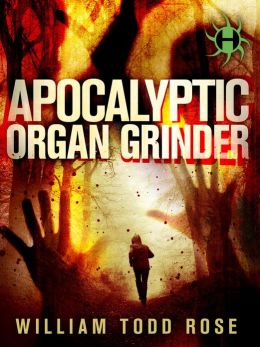
When Farrell’s turn to sign the pig came around, she took the marker and wrote in bold letters, READ APOCALYPTIC ORGAN GRINDER BY WILLIAM TODD ROSE.  This was a brilliant stroke of viral marketing.  People on buses have a lot of time on their hands.  People on buses have smart phones and e-readers to help wile away this time.  And a lot of people from all across the country ride the bus.  That travelling sex pig has the potential to expose my work to people who otherwise may have never heard of it.


And that, dear readers, is why somewhere out there, there’s an inflatable sex pig with my name on it.

Sunday, June 2, 2013

THE END IS NIGH: 06/17/13

On June 17, 2013 the Gabriel Virus will be unleashed upon the world, killing millions. The primary means of dispersion will be the publication of Apocalyptic Organ Grinder, a novella set 150 years after exposure has pushed mankind to the brink of extinction.. While nothing can be done to stop the events which have been set in motion, please refer to the PSAs below for a high-level overview of this disease and its impacts upon society as we know if. For further information, please follow this link. Thank you and have a pleasant apocalypse....


Sunday, May 19, 2013

Apocalypse 101


For those not familiar with the story, Apocalyptic Organ Grinder is set approximately 150 years after a religious cult released a doomsday virus upon an unsuspecting world.  While the Gabriel Virus definitely drove mankind to the brink of extinction, a handful of people managed to survive. Fleeing rampant disease spread by staggering amounts of decaying bodies, they were forced to abandon the cities of the Old World and began rebuilding society in the form of small, isolated settlements.  The majority of these Settlers are still susceptible to the Gabriel Virus and a single case of infection has the potential of completely wiping out a community.

To complicate matters, there are a group of survivors who became genetic carriers of the germ. They display most of the virus’ symptoms, including blisters on the skin filled with contagion-addled pus, but cannot be killed by it.  They are, however, highly contagious to those who don’t have a natural immunity.  Because of this, they were driven out of the burgeoning settlements and forced to form primitive societies within the forests they call home.  Their very existence is seen as a threat to those who can die from the virus, so each settlement has one person designated as the protector of the populace.

These protectors are called Sweepers and their job is to patrol the wilderness and kill any infected people they find.  The meat of the novella centers around a Sweeper named Tanner Kline and a Spewer huntress called Lila. When their paths intersect, events are set into motion which rapidly spiral into a vortex of hatred and violence with the fates of each community hanging in the balance.

The book is different from other post-apocalyptic tales in that there are no good guys or bad guys,;  as one reviewer of the first edition aptly noted, “there’s just a bunch of miserable people trying to survive.”  Because I didn’t want to write a Good versus Evil story, I tried to maintain a neutral tone while working on the novella. Rather than passing judgment, I wanted readers to draw their own conclusions about these characters and the events they are swept into. Both Lila and Tanner are shown for who they are: they both have traits which are admirable, to be certain; but they are also individually marred by hatred, prejudice, and fear.

The second edition from Random House will be available next month through their sci-fi/horror ebook imprint, Hydra, and my excitement about this has reignited my interest in this particular universe.  I’ve spent most of the day working on a short story called War Driving which takes place only a few months after the survivors first fled the cities.  The Sweepers in this time period aren’t the trained killers who patrol future forests; they’re teams of armed scavengers  who make supply runs into the towns and cities, returning booty from a fallen world to a struggling community who desperately needs it.  It’s been fun to actually go into the cities, which was something I never did in Apocalyptic Organ Grinder; it’s also introduced a new group of survivors into this universe: those who chose to stay behind when the majority of those still alive left.

I find this new group interesting, because I know – in the long run – they don’t survive. A century and a half into the future only the Spewers and Settlers remain.  The ruins of the Old World are truly barren with nothing to differentiate the scattered, skeletal remains from those who’d fallen to the Gabriel Virus.  They are a doomed culture still clinging to life, willing to defend the remaining supplies to the death.

I’m not sure exactly how far War Driving will go.  Right now, I’m thinking of it as a short story. But I can easily see it turning into a full-blown prequel to Apocalyptic Organ Grinder. I think the stories would complement each other nicely.  So I’ll just have to wait and see exactly where these new characters lead me.